Code of Conduct
This course was created as the opening chapter of a broader Corporate Communications learning track to be part of employee onboarding. Designed for a global, multicultural workforce, it helps employees build a shared understanding of respectful behavior, responsible decision-making, and their role in maintaining an ethical workplace.
The course combines scenario-based microlearning and interactive knowledge checks inside a streamlined Moodle + H5P environment. Each module blends policy essentials with real-world examples, making abstract concepts concrete and actionable. Learners don’t just read rules; they practice applying them through reflection cards, scenarios, and contextual situations drawn from day-to-day workplace communication examples that occurred in the company previously.
The aim was to create a learning experience that feels clear, easily digestible, modern, realistic, and human-centred; one that empowers employees to recognize issues early, act confidently, and contribute to a culture where everyone feels safe and respected.

Module Breakdown
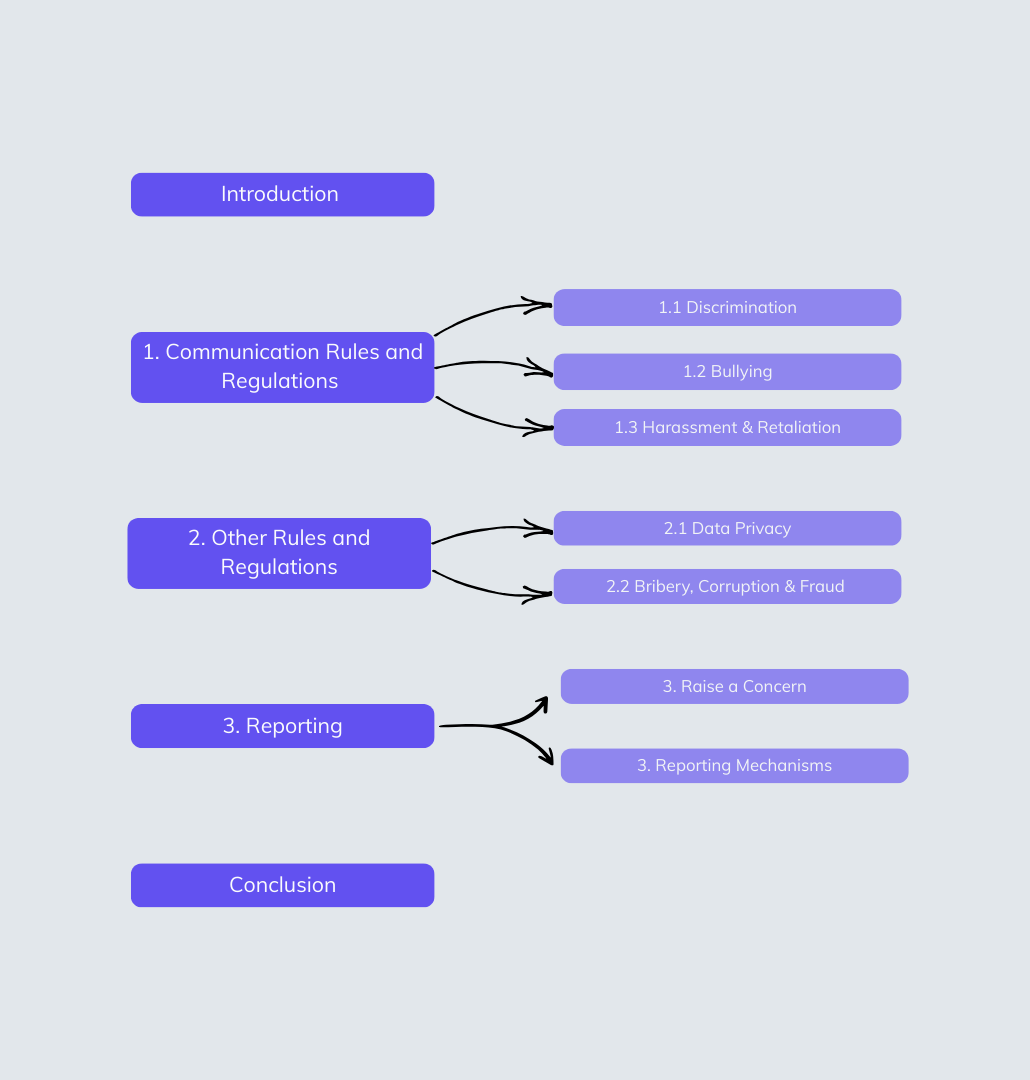
The course consists of three content modules, each addressing a core pillar of ethical behavior and communication at the company:
Module 1. Communication Rules and Regulations
Discrimination - understanding protected characteristics, inclusive behavior, and subtle forms of exclusion.
Bullying - recognizing patterns of repeated negative actions, intent vs impact, and workplace power dynamics.
Harassment & Retaliation - defining unacceptable behaviors, boundaries, and the company’s zero-tolerance stance.
Module 2. Other Rules and Regulations
Data Privacy - handling personal identifiable information (PII) responsibly and understanding the consequences of mishandling data.
Bribery, Corruption & Fraud - recognizing red flags, conflicts of interest, and obligations under Devexperts’ internal policies.
Module 3. Reporting
Raise a Concern OR Reporting Mechanisms - outlining safe, confidential ways to report concerns, depending on the employee’s regional framework; building psychological safety and preventing retaliation.
Design Approach
My approach blended classic ID methodology with accessibility and UX:
Frameworks & Methods
ADDIE for project organization
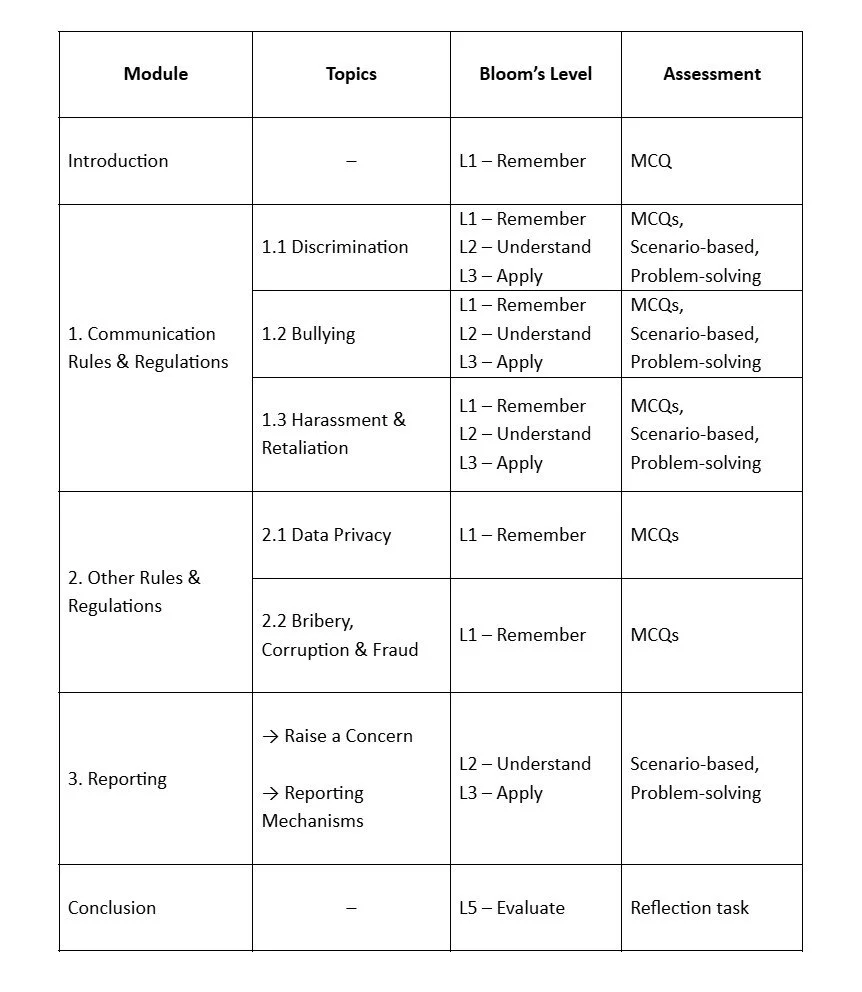
Bloom’s Taxonomy to scaffold outputs from understanding to application
Gagné’s Nine Events embedded through attention cues, guidance, practice, and feedback
Mayer’s Multimedia Principles to avoid overload and ensure a clean, inclusive learning experience
Kirkpatrick (Levels 1–2) to structure evaluation and testing
Learner Persona Insights
Based on the actual demographics, I designed for:
Different levels of familiarity with compliance topics
A preference for short, actionable examples
High daily use of Slack, email, and meetings
Technical Implementation
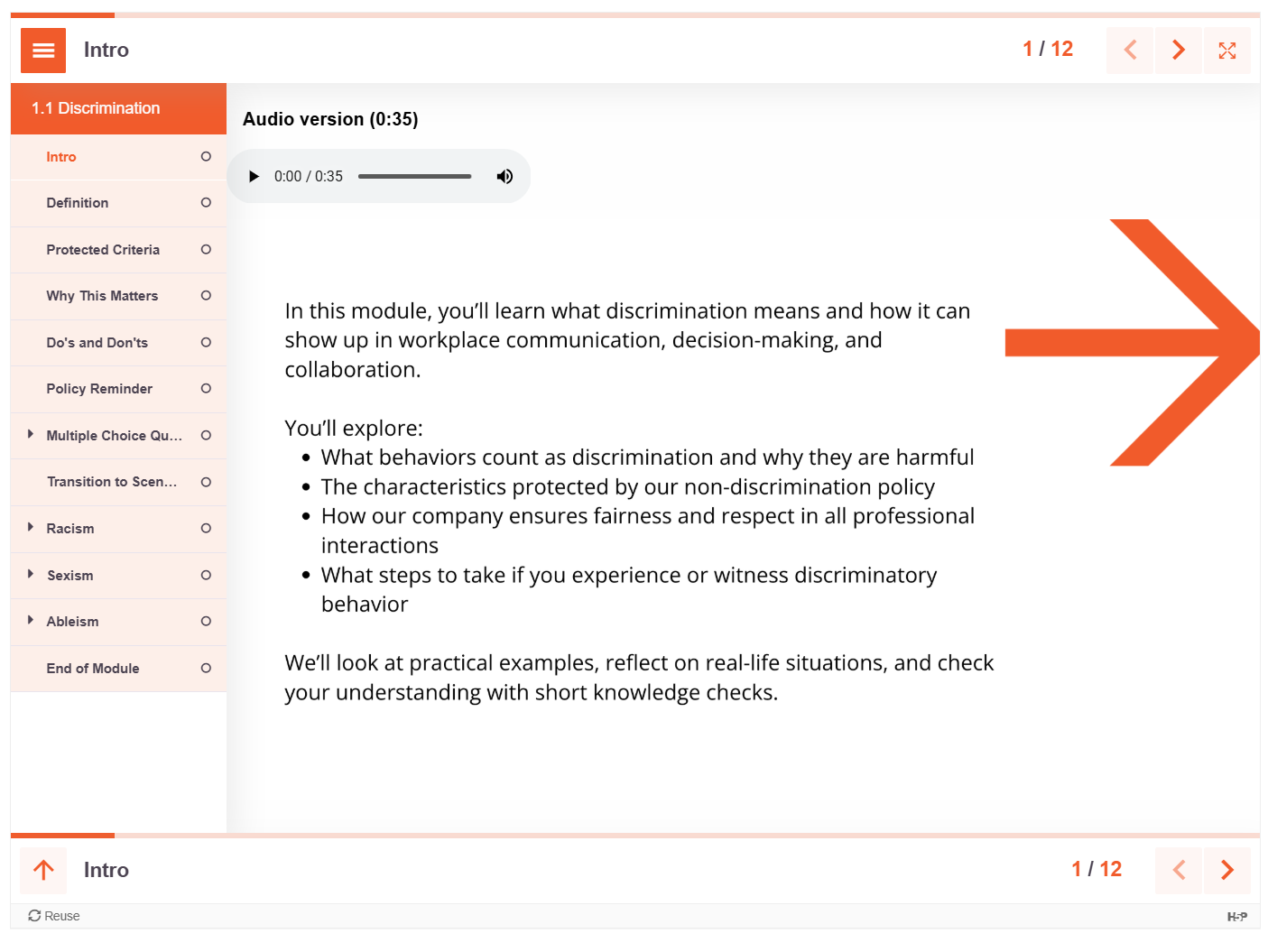
Built in Moodle 4.5.6+ using H5P Interactive Books
Added optional audio narration on every page for accessibility
Designed custom icons and slides in Canva
Performed internal QA cycles and implemented tester feedback
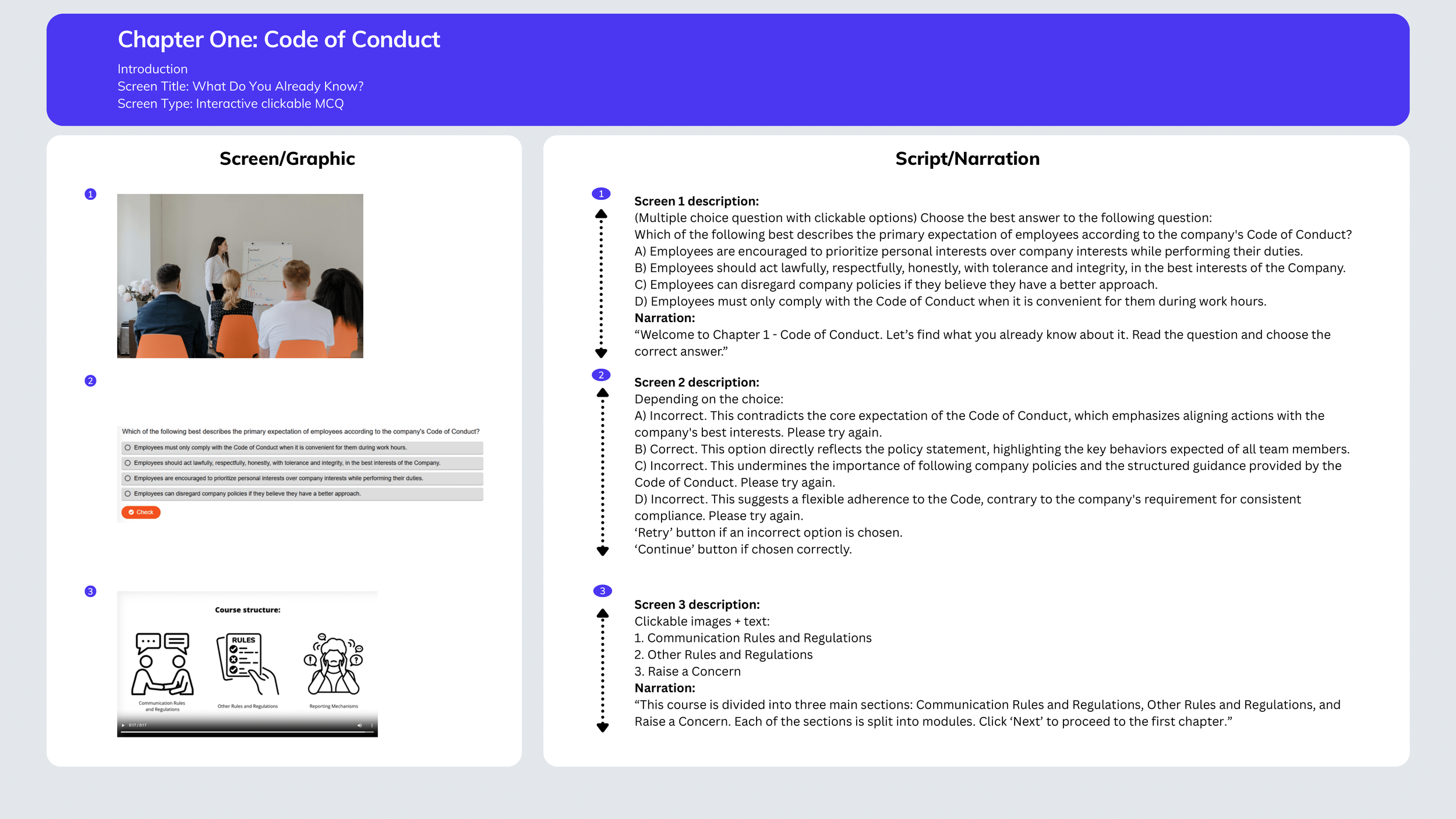
Storyboard Sample (Introduction)
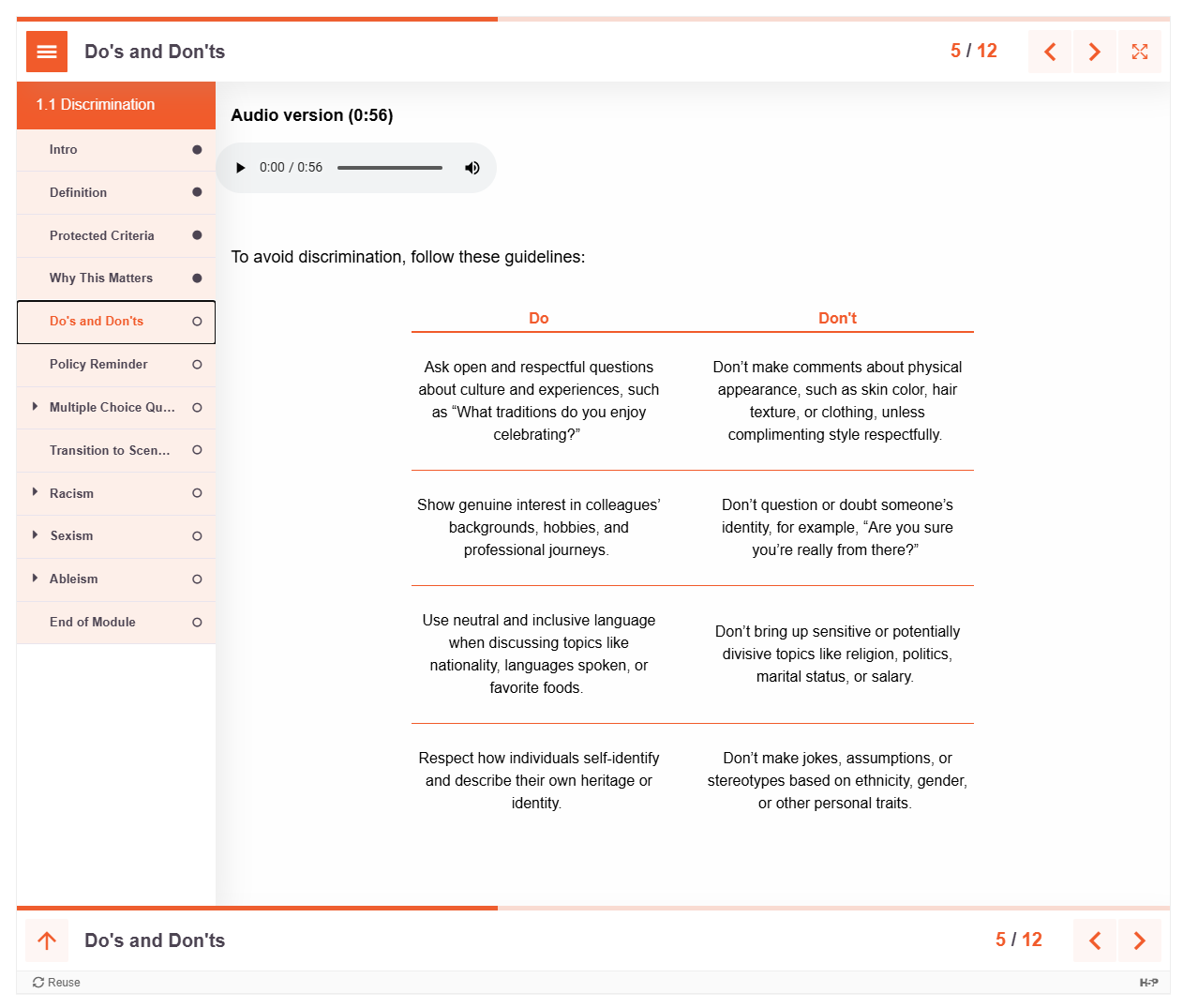
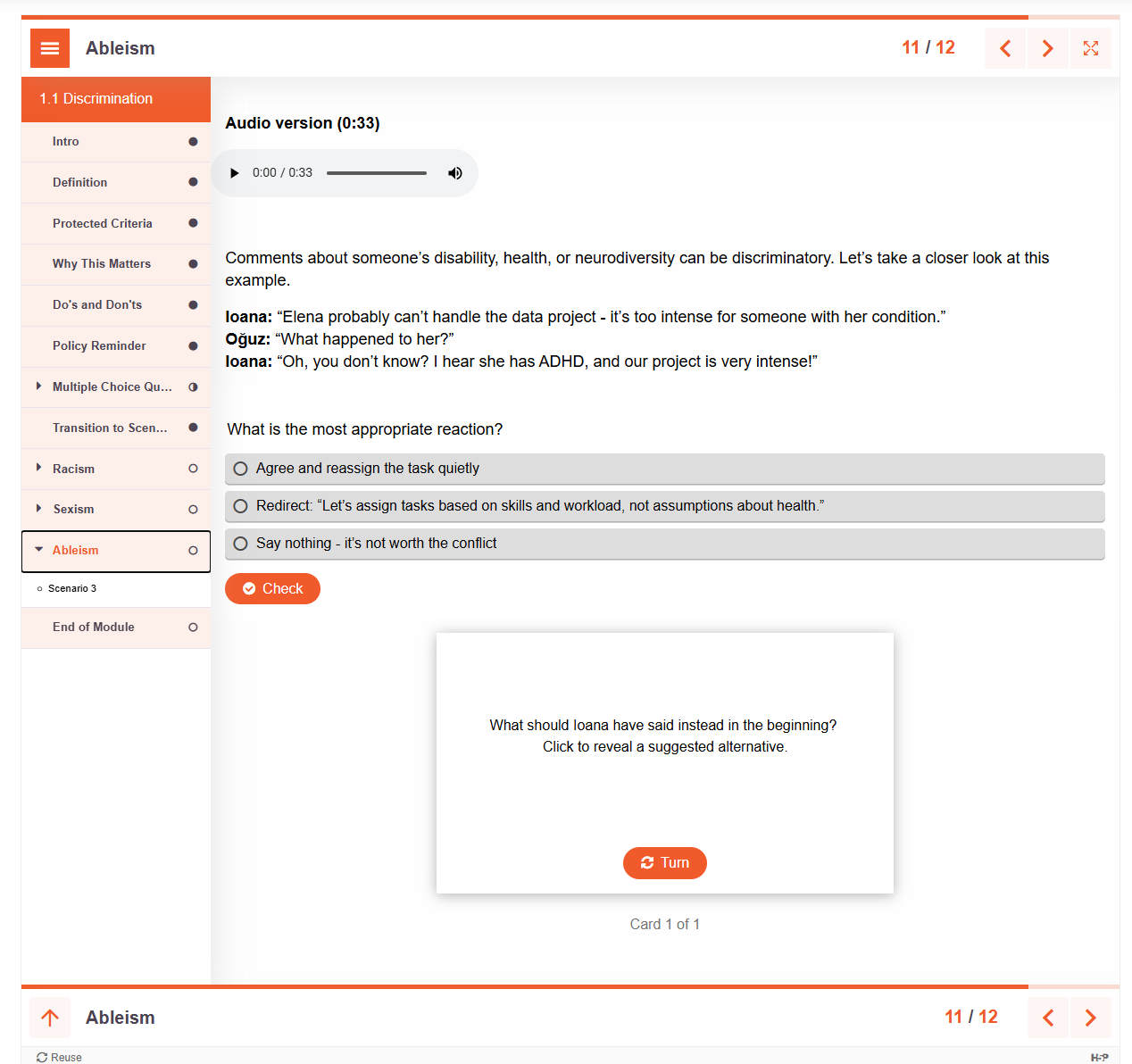
Prototype Pages
-
![]()
Module 1.1 - Intro Page
-
![]()
Module 1.1 - Content
-
![]()
Module 1.1 - Scenario
Knowledge Check Sample
-

Multiple-Choice Question
-
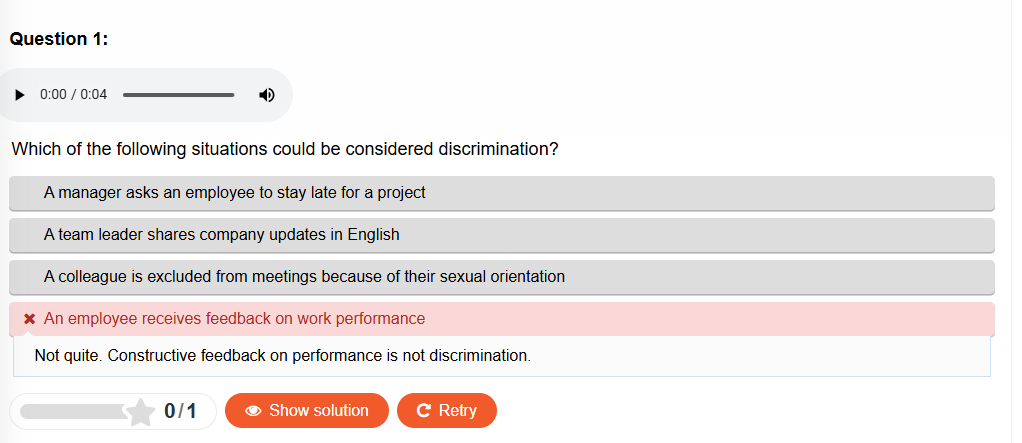
MCQ: Incorrect Answer + Feedback
-
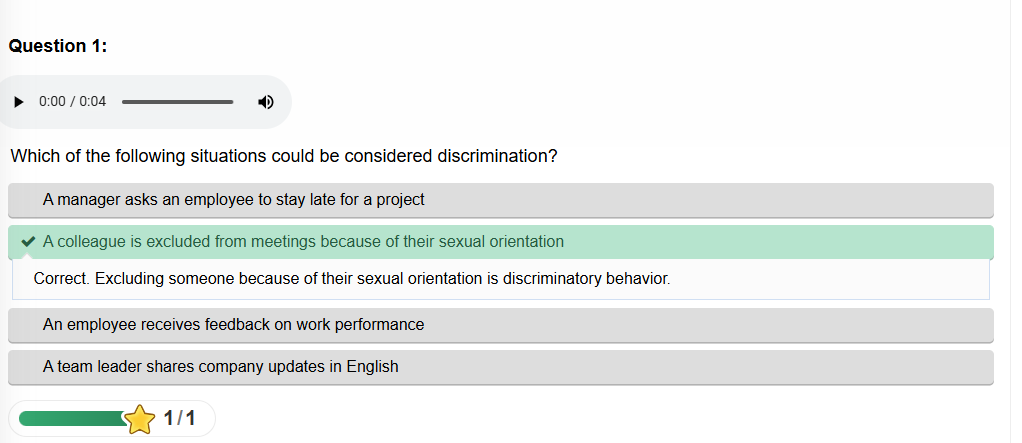
MCQ: Correct Answer + Feedback
Scenario Sample
-
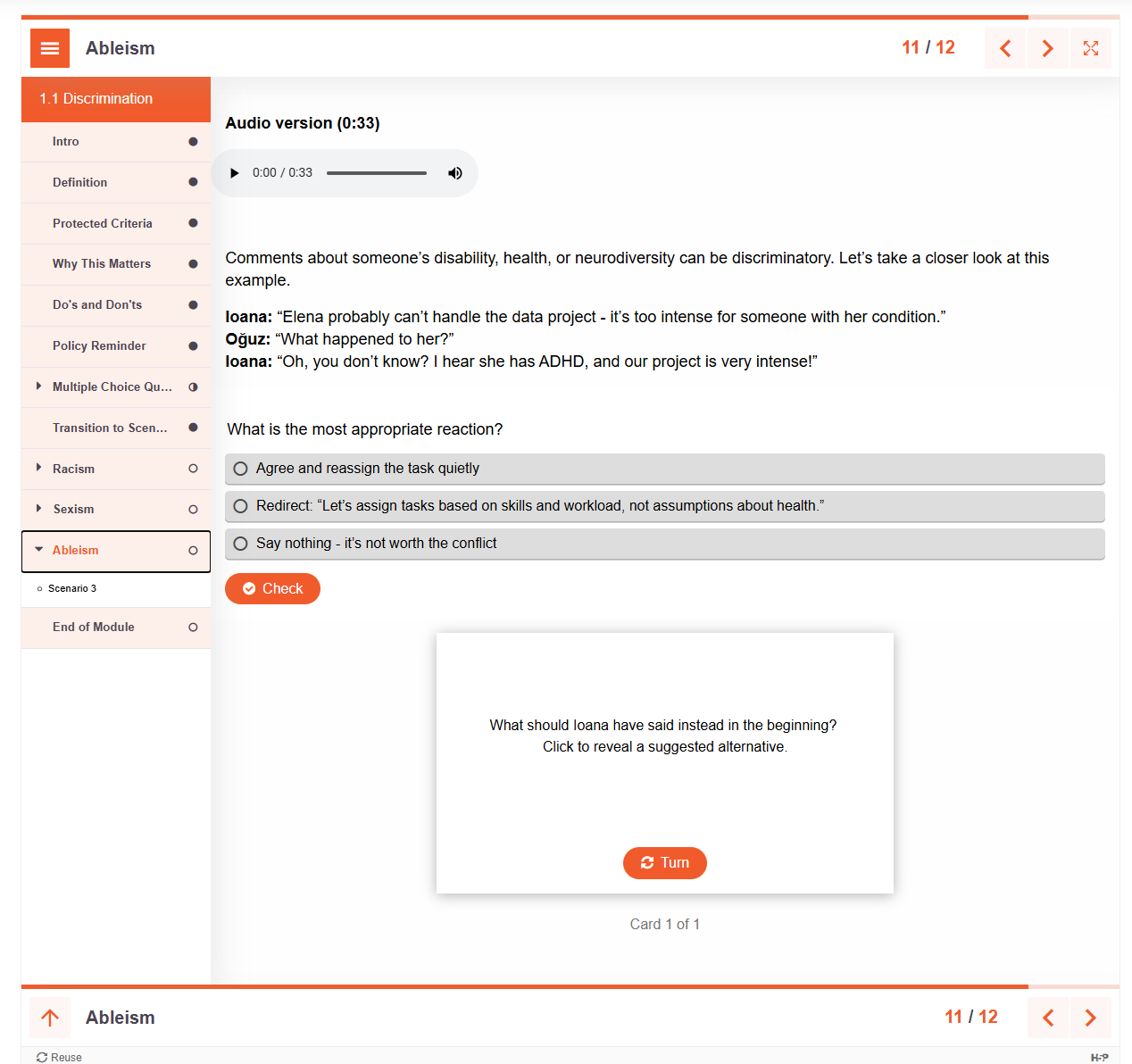
Scenario Page
-
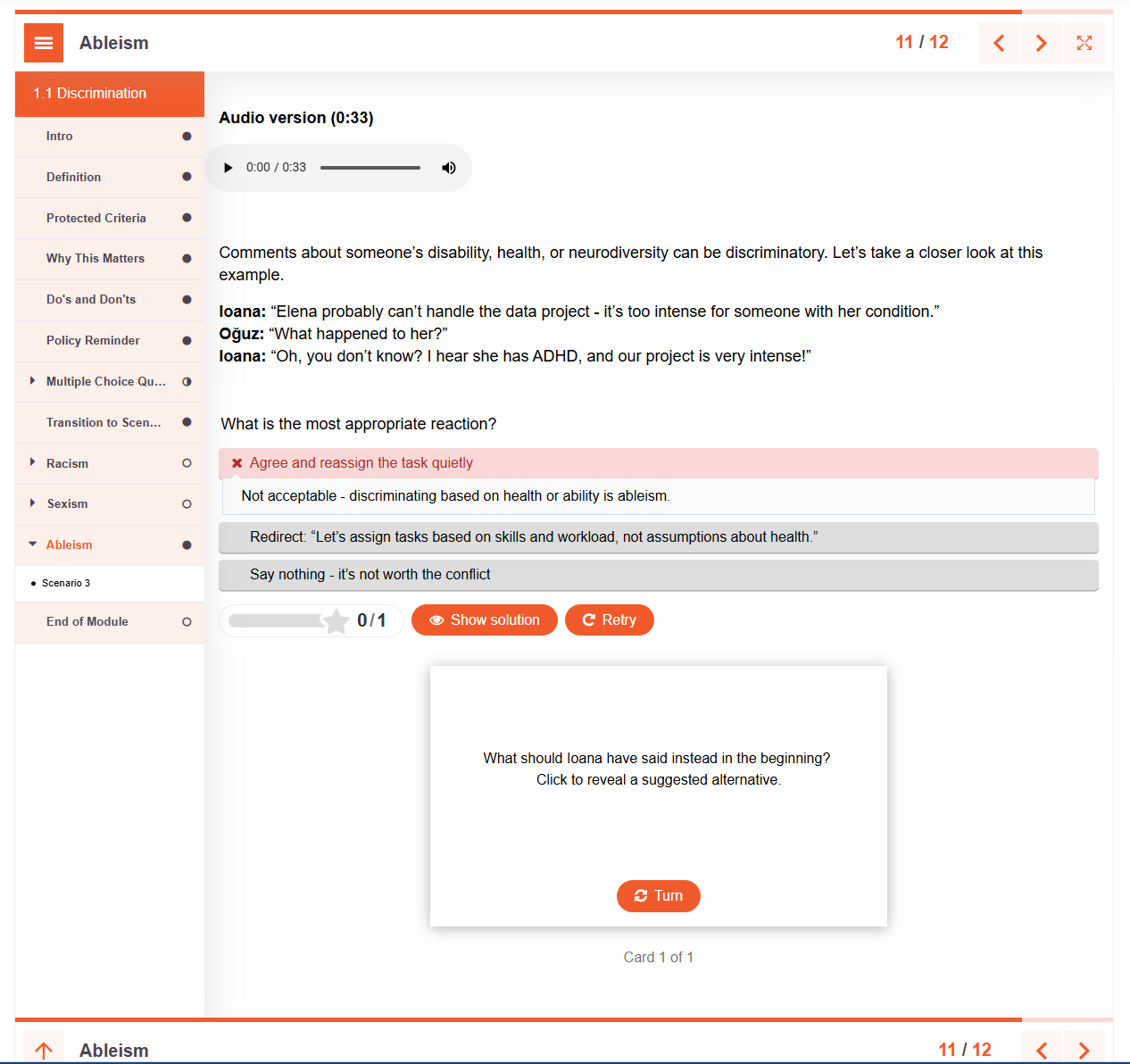
Scenario: Incorrect Answer + Feedback
-
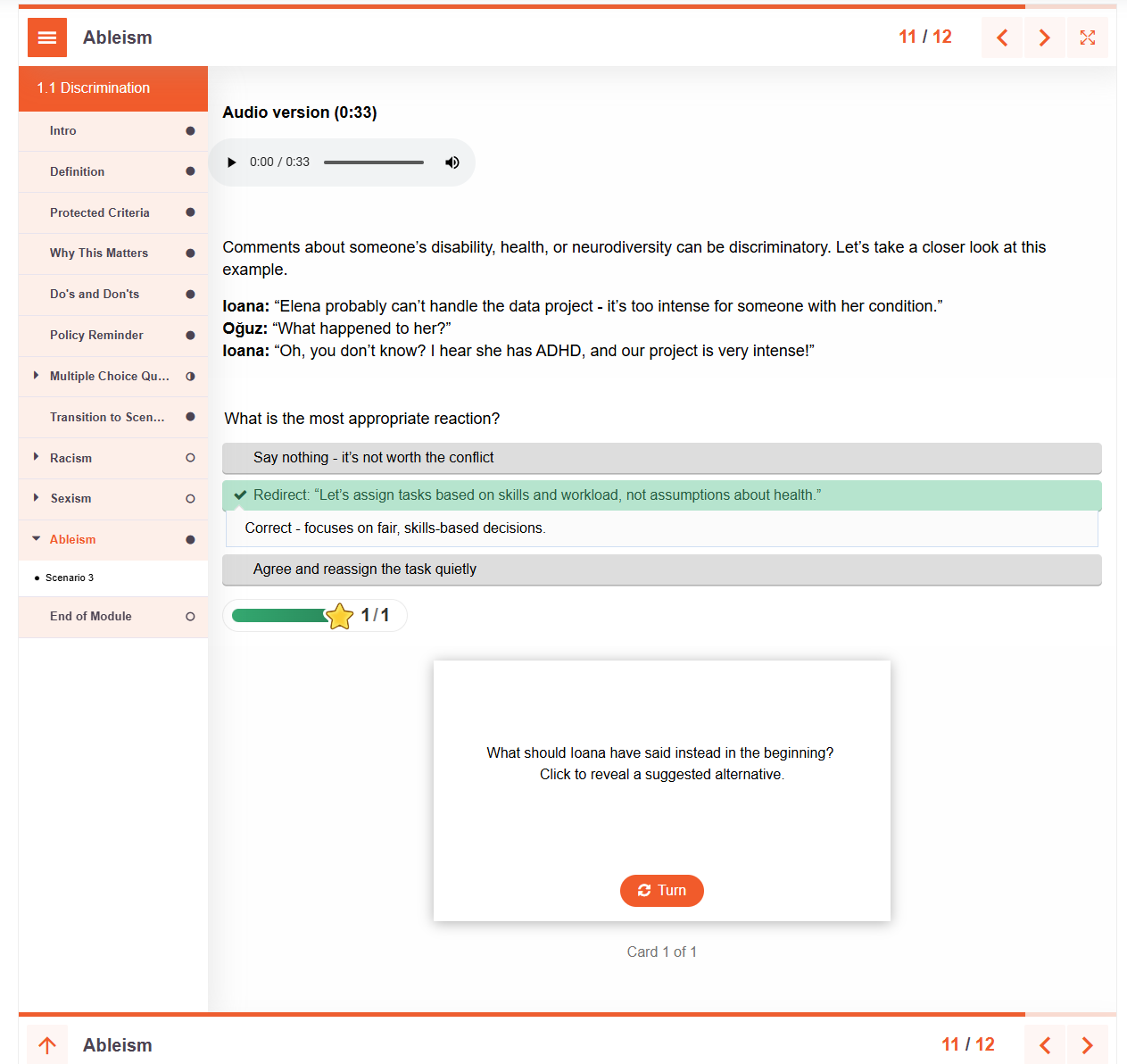
Scenario: Correct Answer + Feedback
Problem-Solving Task Sample
-

Dialog Card: Front
After the scenario-based question, learners are given a problem-solving task - a prompt to reflect on the situation from the scenario.
-
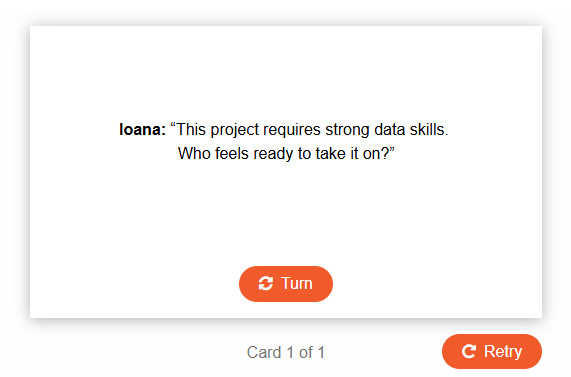
Dialog Card: Back
After coming up with their solutions, learners can turn the card and find a suggested answer that models the desired behavior for the situation.
Testing Phase Reviews
Result
The final course is a clear, engaging, and accessible learning experience that helps employees understand what ethical, respectful behavior looks like in real situations.
Challenges:
Translating legal-policy language into learner-friendly, plain English
Ensuring global relevance across multiple regions
Balancing sensitive content (e.g., harassment and retaliation) with psychological safety
Designing inclusive reflection activities
Coordinating with HR, Legal, and Communications stakeholders for accuracy
Key outcomes:
A structured, intuitive H5P Interactive Books accessible on desktop and mobile
Incorporated accessibility enhancements (audio alternatives, clear structure, no drag-and-drops)
Scenario-based practice that helps learners apply rules
A unified tone and structure that aligns with the broader Corporate Communications track
Improved clarity around sensitive topics
Positive learner reception, especially around the examples, visual cues, and interactivity
A scalable template for future compliance and communication courses
Overall, the course succeeds in transforming a traditionally dense, content-heavy policy area into a human-centered and practice-oriented learning experience that employees actually engage with.